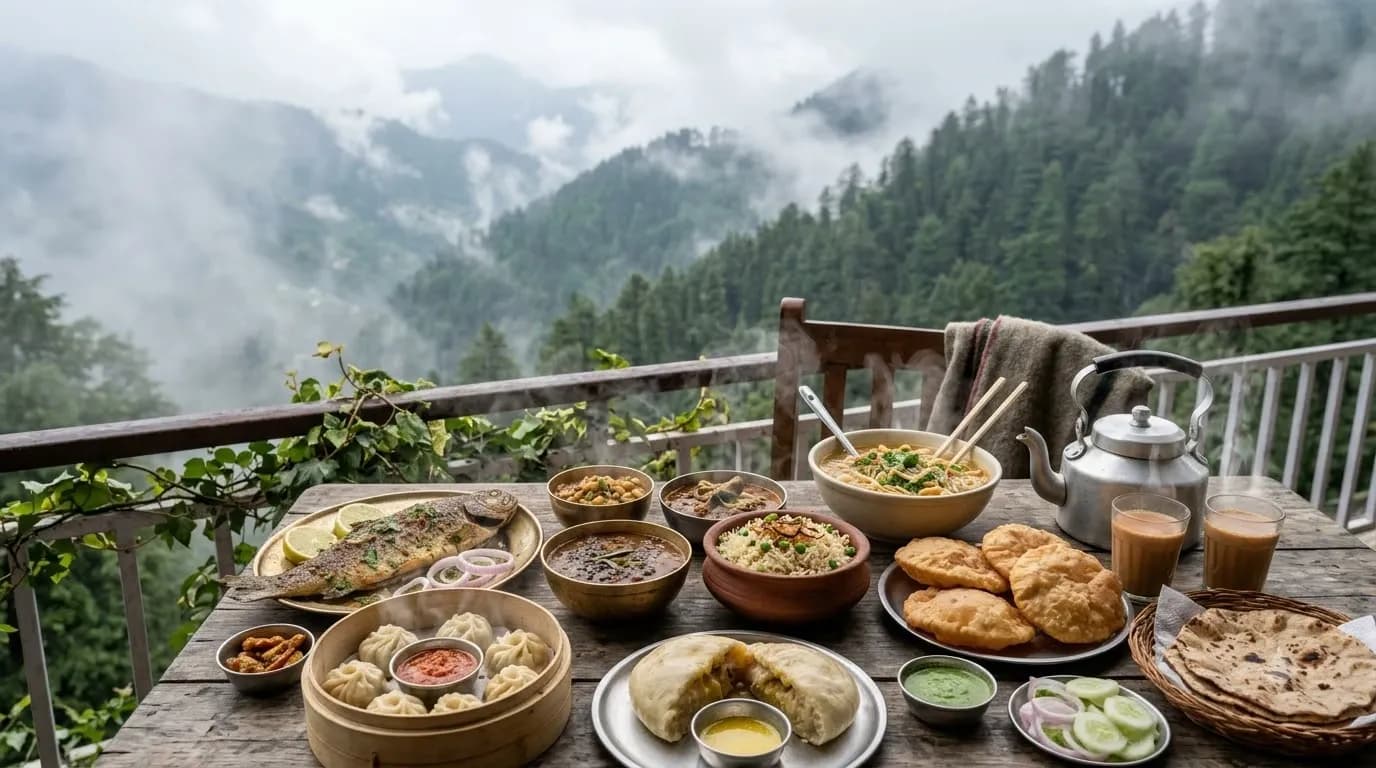
Ask a Himachali what a proper meal looks like and you’ll hear about dhaam, siddu and slow-cooked meat in curd. The food here was built for cold weather and long days in the fields. It’s heavy on lentils, ghee, yogurt, walnuts and wheat, and a lot lighter on the cream and sugar-laden gravies most outsiders expect.
This guide covers what to order in Shimla, Kullu and Manali, and where to look for it. If you’re mapping out the famous food in Himachal Pradesh along your route, this should h
elp you plan your stops.
Start with the Dishes That Define the Region
Dhaam
Dhaam is a festive meal, and the one thing most people should try. It’s cooked by traditional cooks called botis, and in villages it’s often served on leaf plates with guests sitting in rows. A typical spread has rice, moong or maash dal, rajma, a yogurt-based chickpea dish called madra, kadhi and a sweet rice dish called mittha. Dhaam is cooked for weddings and festivals, so you won’t find the real thing on every restaurant menu. Some restaurants and homestays serve a version of it, and asking ahead helps.
Siddu
Siddu is a steamed wheat bread, soft and slightly sour from fermentation, usually stuffed with walnuts, poppy seeds or dal. It comes with ghee and a green chutney. You’ll find it across Shimla and Kullu, and it works as a heavy breakfast or a light dinner.
Babru
Babru is a deep-fried bread stuffed with black gram paste. It’s closer to a kachori than anything else, and it’s often eaten with tamarind chutney or alongside siddu.
Chha Gosht
Chha gosht is a mutton dish cooked with yogurt and gram flour. It’s a non-vegetarian staple in many Himachali homes, and the gravy is thicker and tangier than a standard mutton curry.
Tudkiya Bhath and Sepu Vadi
Tudkiya bhath is rice cooked with potatoes and spices, a one-pot dish that’s easy to find in the Shimla belt. Sepu vadi, lentil dumplings in a yogurt gravy, is another homestyle dish. It’s rarely on tourist menus, but worth asking about at a family-run place.
Shimla: Where to Eat and What to Order
Shimla’s food scene is a mix. Colonial-era tea rooms, North Indian restaurants and Tibetan counters all sit close together around the Mall Road and Ridge area.
The Indian Coffee House on Mall Road is an old favourite for filter coffee, simple snacks and a break from walking. It’s not the place for traditional Himachali food, but it’s part of the Shimla experience.
For actual local food, look beyond the main strip. The lanes around Lakkar Bazaar and Middle Bazaar have small eateries where you may find siddu, chana madra and local snacks. Don’t expect a long menu or English signage. A quick question to the shopkeeper usually works better than reading reviews.
Shimla also has good momos and thukpa, which came with the Tibetan community. These aren’t Himachali dishes in the strict sense, but they’ve become part of the local food culture, especially in colder months.
Kullu: The Valley’s Home Cooking
Kullu is where the traditional food of Himachal Pradesh feels most present. The valley runs along the Beas, and the food reflects that.
Trout is the standout here. The cold, fast-flowing waters of the Kullu valley support trout farming, and you’ll see fish on menus from Kullu town up to Manali. It’s usually pan-fried or grilled with light spices, and it tastes best when it’s fresh. If a restaurant can tell you where the fish came from, that’s a good sign.
Kullu’s dhaam is also quite distinct, often with madra, local rajma and a dal that’s simpler than what you’d get in the plains. If you’re staying in a village homestay around Naggar or nearby, ask whether the family can prepare a meal. Many hosts will, particularly if you tell them a day before.
On the road between Mandi and Kullu, dhabas along the Beas serve trout, rajma-chawal, parathas and tea. These are practical stops. They’re not fancy, but they’re where drivers actually eat.
Manali: Cafes, Trout and a Lot of Choice
Manali has the widest food variety of the three. Mall Road and the Old Manali side are packed with cafes serving everything from pizza to Israeli breakfasts. That’s fine if you want comfort food, but if you came for local dishes, you’ll need to be a bit selective.
Johnson’s Cafe is one of the better-known places for trout in Manali. Several other restaurants around Mall Road and Old Manali serve it too, so compare menus and ask how it’s cooked.
For Himachali meals, look for restaurants that list Kullvi dhaam, siddu or madra specifically. If a menu lists only generic North Indian dishes, it’s probably not the place for local food.
Manali also has a strong Tibetan food presence. Thukpa, momos and butter tea are easy to find, and they’re useful when it’s cold or raining.
A Few Practical Tips for Exploring Himachali Food
- Ask for local dishes by name. Menus in tourist areas lean toward familiar food. Asking for siddu, babru or madra shows you want the local version.
- Eat early at roadside dhabas. Fresh siddu and babru are best in the morning, before they sit around.
- Try dhaam at a homestay or local restaurant, not just at festivals. If you’re travelling between Shimla, Kullu and Manali, a homestay stop is the easiest way to get one.
- Check the season. Apples are a seasonal highlight in the region, so if you’re visiting late summer to autumn, ask about fresh local fruit and juices.
- Go easy on heavy food at altitude. Ghee-rich meals feel great after a cold day, but pace yourself if you’re heading higher up, such as towards Rohtang or Solang.
- Carry cash for small dhabas. Not every eatery in smaller towns takes digital payments reliably.
A Rough Food Route from Shimla to Manali
If you’re going Shimla → Kullu → Manali, here’s one way to plan it:
- Shimla: Coffee and snacks on Mall Road, then a local meal in the bazaar area (siddu, chana madra).
- On the way: Stop at a dhaba along the Beas for tea or a simple meal.
- Kullu: Trout for lunch or dinner, and dhaam at a homestay if you can arrange it.
- Manali: Trout at one of the established places, Tibetan food for a colder evening, and a Himachali thali if you find one.
It’s a long drive between these places, so treat food stops as part of the break in the journey. At Miles to go, we find the best meals usually come from places with no signboard to speak of.
Frequently Asked Questions (FAQs)
What Is the Most Famous Food in Himachal Pradesh?
Dhaam is the best-known traditional meal, and siddu and chha gosht are widely recognised. Trout is popular in the Kullu-Manali belt, though it isn’t a traditional dish in the same sense.
What Is the Traditional Food of Himachal Pradesh Like?
It’s built on rice, lentils, wheat, yogurt and ghee, with walnuts and local spices in many dishes. Meals are filling, mildly spiced and designed for cold weather.
Is Himachali Food Vegetarian?
Both exist. Dhaam is usually vegetarian, while chha gosht and trout are non-vegetarian. Vegetarians won’t struggle to find options, especially at local eateries and homestays.
What Local Food of Himachal Pradesh Should I Try First?
Siddu with ghee and chutney is an easy starting point. If you can arrange a meal, try a dhaam too.
Where Can I Eat Real Himachali Food in Manali?
Look for restaurants that mention Kullvi dhaam or siddu on the menu, and ask locally if you’re unsure. Homestays in nearby villages are often more reliable than tourist-area cafes.
Is Trout Safe and Good to Eat in Kullu and Manali?
Trout is a regular menu item, and restaurants that source it fresh from local farms generally serve it well. Ask how it’s prepared and where it comes from.
Can I Get Himachali Food in Shimla?
Yes, but you may need to look beyond Mall Road. Local eateries in the bazaar areas are more likely to serve dishes like siddu and madra.
What Should I Avoid Eating While Travelling in the Hills?
Nothing is off-limits, but be careful with stale street food and anything that’s been sitting out. Eating at busy places with high turnover is a safe habit.
Is Dhaam Available Every Day?
Not usually. It’s traditionally a festive meal, so most restaurants serve it only on request or in a simplified form. Calling or asking ahead helps.
Continue planning
Related planning guides
A Food Lover's Guide to Dalhousie: What to Eat Near Famous Tourist Attractions
Practical trip insights and route guidance.
Rajasthan Travel Guide: Top Destinations and the Food Each One Is Known For
Practical trip insights and route guidance.
10 Best Places to Visit in Dalhousie for a Memorable Hill Station Trip
Practical trip insights and route guidance.